 GIRI
Research
Twelve divisions in four domains, led by the founders. From fellows in NARC laboratories to a proposed green-chemicals corridor, eight divisions have work in progress.
Living systems
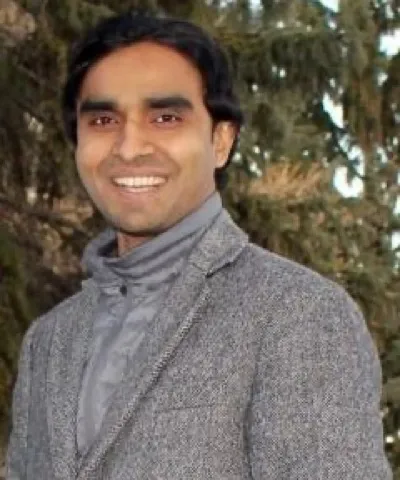
 Led by Dr. Dinesh Adhikary and Dr. Upama Khatri-Chhetri
How do we keep crops and medicinal plants healthy in Nepal's fields and forests? Graduate fellows work in NARC and university laboratories while Agro-Clinic is designed to carry the answers back to farmers.
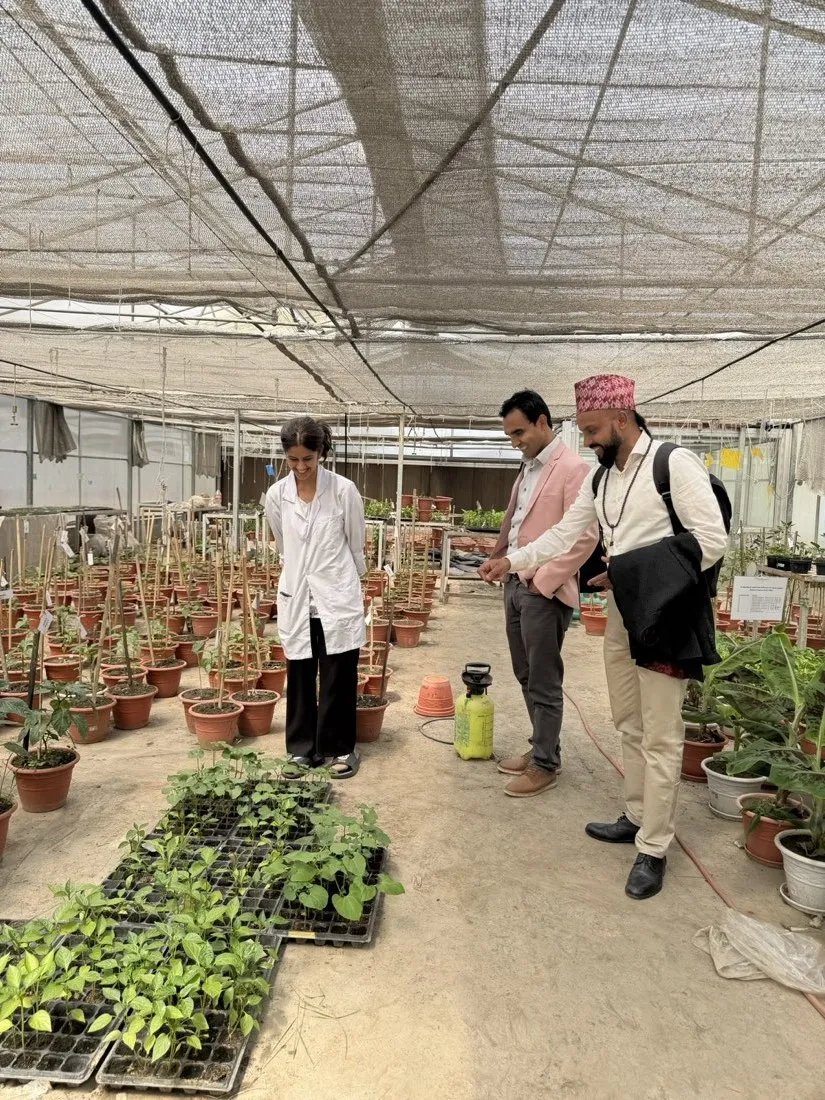
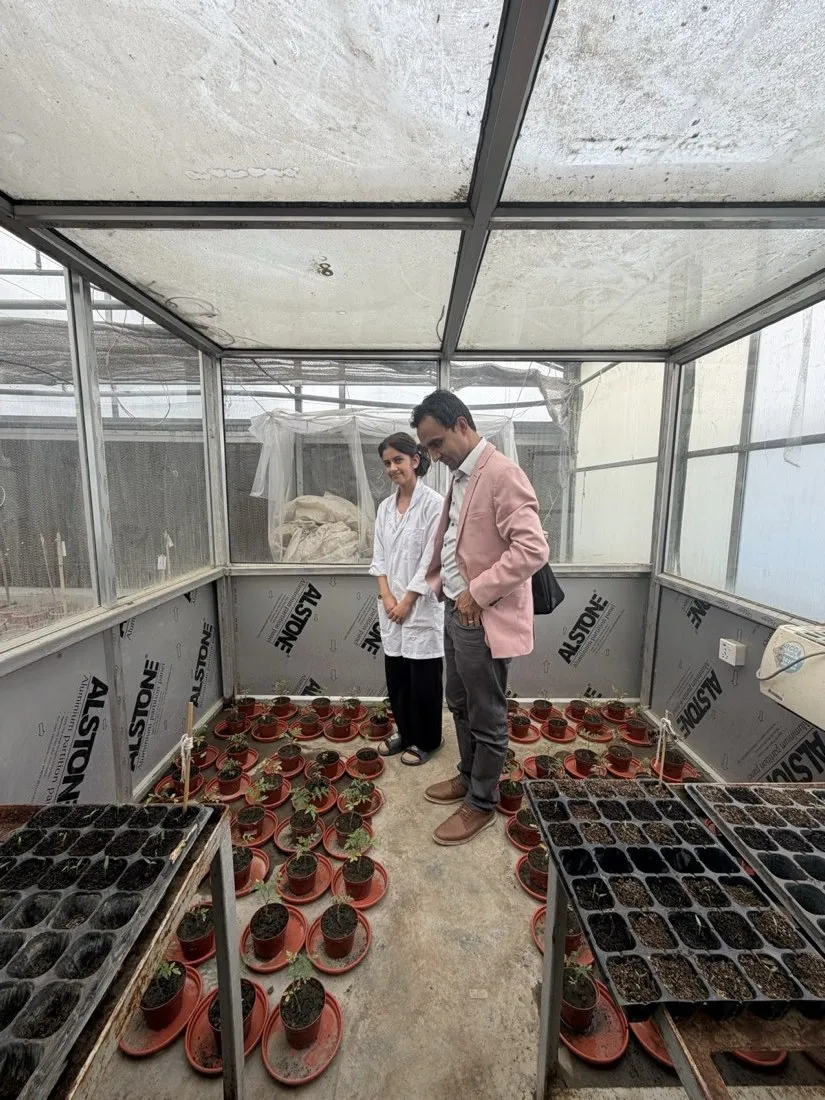
- ActiveD10Bacterial wilt (Ralstonia) in tomato: GACA fellow Prashamsa Bhusal, Agriculture and Forestry University
- ActiveD10Clubroot biocontrol in mustard. Related: a review in Plant Pathology (2025) and a biocontrol paper accepted in Scientific Reports
- ProposedD10Palpa turmeric and community farming
- In developmentD10Agro-Clinic: a mobile crop doctor that brings diagnosis and soil advice to farmers
- In developmentD01Himalayan herb omics: 1,008 medicinal herbs with ethnobotanical records
- DraftD01Cannabis, hemp and native plants regulation roadmap
Forming divisions in this domain, seeking directors: D02 Integrative Life Sciences, D06 Public Health, Epidemiology and Rural Innovation.
Working with the Nepal Agricultural Research Council, Agriculture and Forestry University, Far Western University and Nepal Plant Disease and Agro Associates.
Energy, materials and enterprise
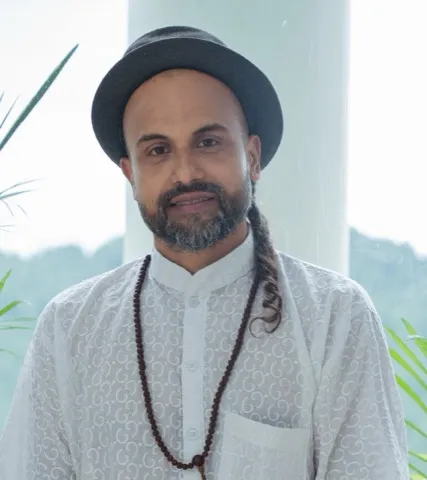 Led by Anup Khattri Chettri, Executive Director
Can Nepal turn its spilled hydropower into the fertiliser, fuel and materials it now imports? We study the chain from power price to farm gate.
- ProposedD08Vajra Nadi green chemicals corridor
- DraftD08EV charging and hydrogen strategy
Forming division in this domain, seeking a director: D11 Economics, Business and Innovation.
Vajra Nadi, proposed
A green chemicals corridor that would turn Nepal's spilled hydropower into green urea, bio-ethanol and hydrogen, so Nepal makes the inputs it now imports.
Concept: Anup Khattri Chettri. Read the proposal.
Intelligence and Earth
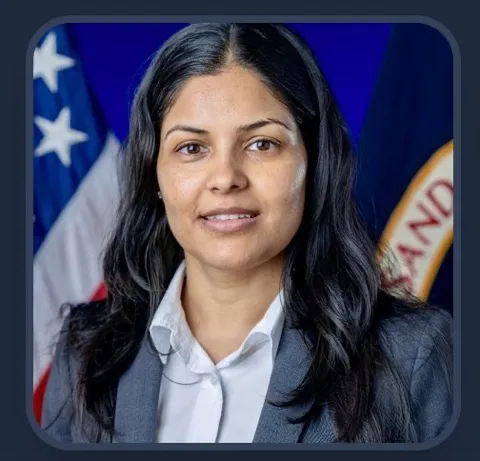 Led by Dr. Pratima KC and Anup Khattri Chettri
How can AI and satellite data help Nepal's farms, forests and language? Three tracks, each with its own lead.
- ActiveD03Early weed and disease detection with machine learning, Far Western Nepal
- In developmentD03VOX, Nepali-language voice and language AI
- ActiveD03AI evaluation: testing models against expert-approved answers
- ConceptD04Earth observation for drought and forest health
Forming division in this domain, seeking a director: D09 Space, Physics and Cosmology.
Field
Machine learning that spots weeds and crop disease early, tested in Far Western Nepal.
Dr. Pratima KCLanguage
VOX, voice and language AI that understands Nepali.
Anup Khattri ChettriEvaluation
Testing AI models against answers approved by experts, so claims are checked before use.
Anup Khattri ChettriPeople, policy and culture
All four founders, each with their own projectHow do values, ideas and policy shape what Nepal does with its science? Education, evidence-first policy proposals and contemplative practice, each founder with their own project.
- PublishedD12Oxford Handbook chapter on the five human values
- ActiveD12GACA Graduate Fellowship
- In developmentD12Career guidance system for Nepali students
- ActiveD12Kathmandu Philosophy Club, 14 public sessions
- ActiveD07NRN and diaspora investment reform, with Catalyst Club Nepal
- DraftD07Plant-policy regulation roadmap
- ActiveD05Kathmandu Meditates™
Kathmandu Philosophy Club is coordinated by Piyush Gajurel.
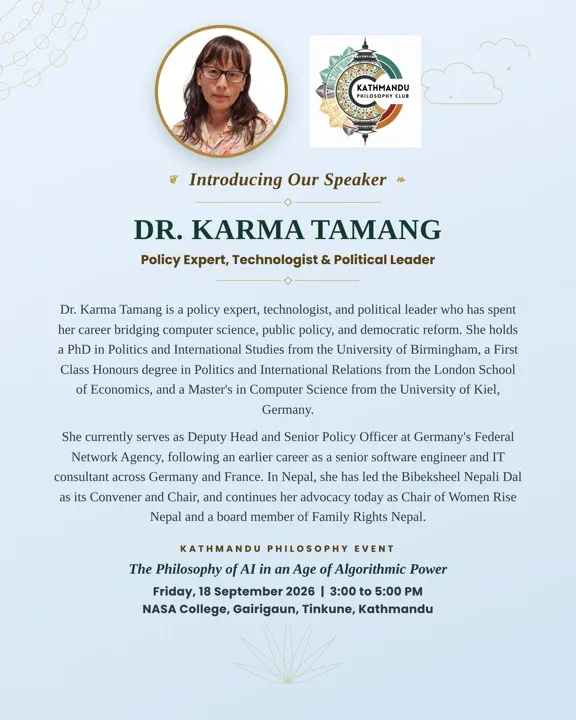 18 Sep 2026
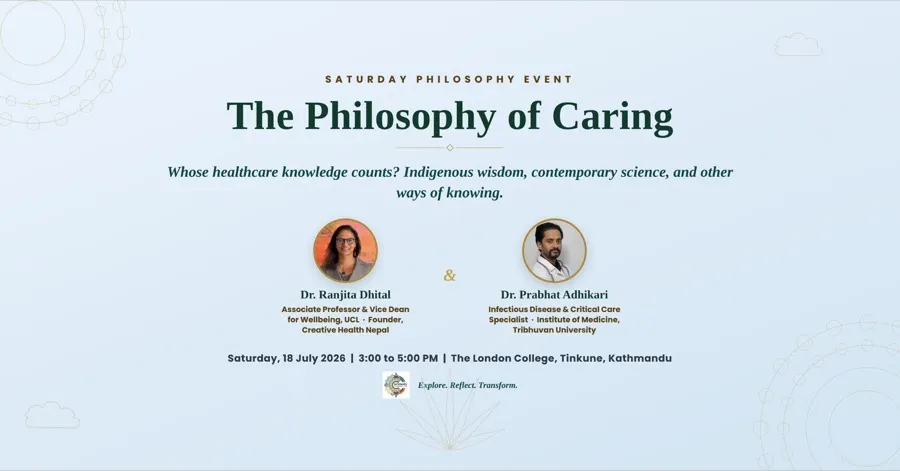 18 Jul 2026
 27 Jun 2026
Recent Kathmandu Philosophy Club sessions. See all 14.
All twelve divisions
The four founders lead the divisions today and hand each one to a dedicated division director as scientists join. Eight divisions have work in progress; four are forming. Divisions with active projects are linked: click one to go straight to its projects.
- D01Ayurveda and Plant-Based WellnessIn development: Himalayan herb omics · Draft: Plant-policy roadmapLiving systemsUpama Khatri-Chhetri, Dinesh Adhikary
- D02Integrative Life SciencesLiving systemsSeeking a director
- D03AI, Quantum Computing and Data ScienceActive: Weed and disease detection, AI evaluation · In development: VOXIntelligence and EarthPratima KC, Anup Khattri Chettri
- D04Environment, Climate and SustainabilityConcept: Earth observation for drought and forest healthIntelligence and EarthPratima KC, Anup Khattri Chettri
- D05Consciousness, Mind and SocietyActive: Kathmandu Meditates · In development: PranavaPeople, policy and cultureAnup Khattri Chettri
- D06Public Health, Epidemiology and Rural InnovationLiving systemsSeeking a director
- D07Social Sciences, Culture and Policy StudiesActive: NRN and diaspora investment reform · Draft: Plant-policy roadmapPeople, policy and cultureAll four founders
- D08Engineering, Materials Science and Advanced TechnologyProposed: Vajra Nadi corridor · Draft: EV and hydrogen strategyEnergy, materials and enterpriseAnup Khattri Chettri
- D09Space, Physics and CosmologyIntelligence and EarthSeeking a director
- D10Food Systems, Agriculture and NutritionActive: Tomato wilt, Clubroot · Proposed: Palpa turmeric · In development: Agro-ClinicLiving systemsDinesh Adhikary, Upama Khatri-Chhetri
- D11Economics, Business and InnovationEnergy, materials and enterpriseSeeking a director
- D12Humanities, Arts and EducationPublished: Oxford chapter · Active: GACA fellowship, Philosophy Club · In development: Career guidancePeople, policy and cultureAll four founders
Publications
Peer-reviewed work by our founders, with the full citations on one page.
An exploratory survey of 54 respondents informs the Oxford chapter. All four founders are its authors, which is what the Division of Humanities, Arts and Education builds on.
- PublishedGhimire, A., Devkota, S., Sarkar, A., Mittapelly, P. and Adhikary, D. “Clubroot Disease in South Asia: Distribution and Management Practices”, Plant Pathology (Wiley), 2025. Open access, supported by GACA Foundation. DOI
- AcceptedDevkota, S., Ghimire, A., Timila, R. D., Adhikary, D. and Manandhar, H. K. “Native biocontrol agents for the suppression of clubroot disease in rapeseed and mustard in Nepal”, Scientific Reports (Springer Nature). Accepted for publication.
- PublishedKhattri Chettri, A., Khatri-Chhetri, P., Adhikary, D. and Khatri-Chhetri, U. “Global Citizenship Education and the Five Human Values”, Oxford Handbook of Global Citizenship Education, Oxford University Press, 2026. DOI